

What a Woman in Formula 1 Could Mean for the Sport
There is a moment that every sport eventually hopes to reach. A moment where years of investment, visibility, and persistence finally begin to translate into genuine opportunity at the very top level.
Formula 1 is not there yet when it comes to women.
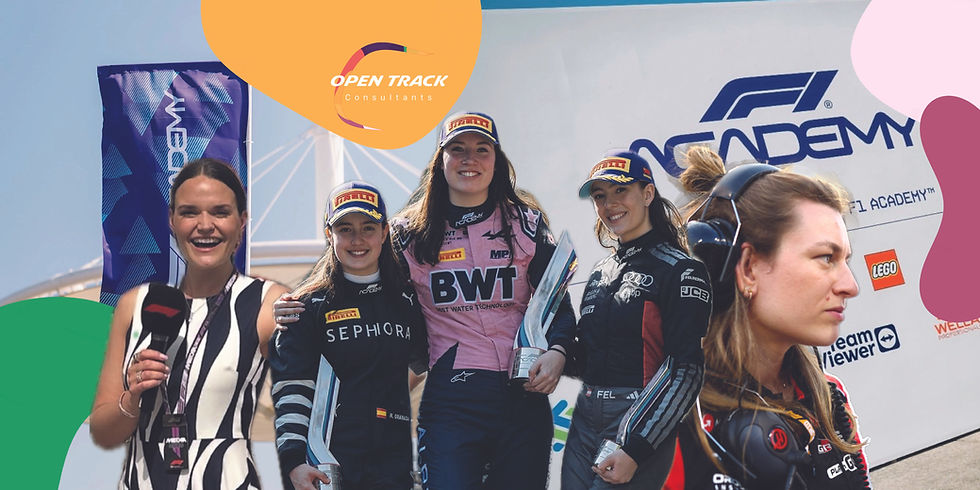
That is the uncomfortable reality underneath many of the current conversations around representation in motorsport. While initiatives like F1 Academy are undeniably important, the pathway beyond them still feels fragile. The leap from visibility to sustainable progression remains enormous. There are still gaps in funding, development opportunities, long-term backing, and serious integration into the existing feeder system that leads toward Formula 1.
Acknowledging that does not diminish the value of what is being built. If anything, it makes these efforts even more important.
Because before a woman can realistically fight for a Formula 1 seat, the sport first needs to create an environment where talented female drivers are consistently able to progress through every level of motorsport without constantly hitting structural barriers along the way. Talent alone has never been enough in racing. Access, money, networks, visibility, and timing shape careers just as much as lap times do.
Still, despite how far away that future may currently feel, I keep thinking about what would happen if the sport eventually got there. What it would mean if a woman not only reached Formula 1, but became genuinely competitive within it. Not treated as a novelty for headlines or social media engagement, but respected as a serious driver capable of delivering results on the biggest stage in motorsport.
Because sport changes when representation reaches the very top.
We have already seen versions of this story unfold elsewhere. Women’s football transformed once investment, broadcasting, and visibility finally aligned with the level of talent that had always existed there. Tennis showed generations of young girls what global sporting icons could look like. Across different sports, moments of breakthrough representation have consistently expanded audiences and reshaped culture around who belongs in elite competition.
The impact rarely begins with statistics or podiums. It starts with visibility.
A young girl watching qualifying and seeing herself reflected in the sport in a way she never has before. Women attending races without feeling like outsiders inside fan culture. Female fans finally having someone to rally behind whose journey mirrors parts of their own experiences. Those things sound small on paper, yet they fundamentally change how people connect to sport emotionally.
Formula 1 in particular holds enormous cultural power. Drivers become global celebrities whose influence stretches into fashion, media, entertainment, and technology. A successful female Formula 1 driver would inevitably shift perceptions around who gets associated with speed, leadership, technical skill, pressure, and excellence. Not through campaigns or slogans, but through visibility at the highest level of competition.
There is also a very practical side to this conversation.
The appetite already exists. Fans are following F1 Academy closely despite the limited infrastructure surrounding it. They are investing emotionally in these drivers and their stories. They are asking for merchandise, media coverage, sponsorship opportunities, and long-term support systems that still lag behind the interest itself. The audience is proving that people want to engage with women’s motorsport when it is given room to breathe and grow.
That makes it difficult not to wonder what Formula 1 could unlock if a woman eventually reached the grid and performed successfully there.
And then there is the part that lives slightly further into the future. The hopeful part.
Maybe a successful female Formula 1 driver changes how teams scout talent altogether. Maybe more sponsors start investing earlier in young girls coming through karting because they can finally envision a tangible return at the very highest level. Maybe more women begin pursuing careers across engineering, strategy, mechanics, media, and leadership because the sport starts to feel less closed off to them culturally.
Visibility has a way of creating momentum that extends far beyond one individual person.
I think that is part of why I keep returning to these conversations in the first place. Not because I believe Formula 1 is on the verge of immediate change, and not because representation alone magically fixes deeper structural problems within motorsport. I write about this because I want to see women genuinely thrive in spaces that have historically pushed them to the sidelines. I want to see talented drivers given real opportunities to succeed. I want young girls growing up now to see motorsport as a space where they belong naturally, rather than somewhere they constantly have to prove they deserve to be.
Formula 1 still has a long way to go before that future becomes reality.
But every meaningful shift in sport once started as something people insisted was unrealistic too.


Comments