

The New ‘Opening Race’ Explained: F1 Academy’s Smartest Move Yet?
Motorsport innovation does not always arrive in dramatic overhauls. Sometimes, a subtle rule change can quietly reshape how drivers are tested and developed.
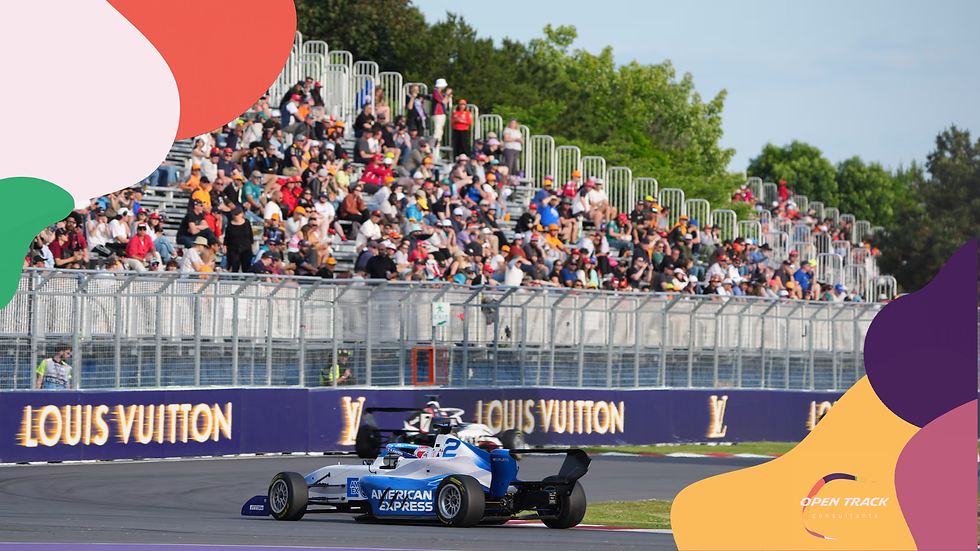
The introduction of F1 Academy’s new three-race weekend format, including the Opening Race, comes in response to disruption in the 2026 calendar. Following the cancellation of a planned round in Saudi Arabia, the series chose to restore its race count in a different way. Instead of adding a replacement venue, F1 Academy expanded selected race weekends in Montreal and Austin, introducing a three-race format to maintain a 14-race calendar.
Rather than simply replacing lost track time, this approach rethinks the structure of a race weekend while placing greater emphasis on driver development.
So what makes this new race so significant?
What Is the F1 Academy Opening Race?
The Opening Race is a new addition to selected F1 Academy weekends, forming the first of three races:
Opening Race
Reverse Grid Race
Feature Race
What sets it apart is how the grid is decided. Instead of using each driver’s fastest qualifying lap, the Opening Race order is based on their second-fastest lap.
At first glance, that might seem like a minor tweak. In reality, it changes how drivers and teams approach qualifying.
Why the Second-Fastest Lap Matters
Traditionally, qualifying in junior categories rewards one thing above all else, delivering a single perfect lap. That approach can sometimes mask inconsistency or limit the strategic depth of a session.
By using the second-fastest lap, F1 Academy shifts the focus.
This change rewards cross-team strategy and encourages further development for drivers. Rather than chasing one standout moment, teams must think more holistically, planning multiple push laps, managing tyres, and ensuring their drivers can deliver consistently under pressure.
How the F1 Academy Opening Race Tests Driver Ability
This format changes what it means to perform well.
Drivers are now asked to demonstrate consistency across multiple laps, precision in execution, awareness of tyre performance, and mental discipline under repeated pressure.
In higher levels of motorsport, these are essential skills. Raw speed may attract attention, while repeatable speed builds long-term success.
Fairness and Competitive Balance
Another key benefit is how this system improves competitive fairness.
A single fastest lap can be influenced by factors outside a driver’s control, such as traffic, yellow flags, or track evolution. By factoring in a second lap, the grid becomes a more accurate reflection of sustained performance.
This approach reduces randomness while still preserving excitement, which is a balance many racing series aim to achieve.
Strategic Implications
The introduction of the Opening Race forces teams to rethink their entire weekend approach.
In qualifying, one lap is no longer enough. Tyre management becomes increasingly important, and drivers must balance risk across multiple attempts.
Across the weekend, the Opening Race sets the tone. Momentum can shift more easily, and recovery from mistakes remains possible, though more challenging.
Entertainment Without Compromise
From a fan perspective, the Opening Race adds meaningful action rather than filler.
It creates more varied grid positions, increases overtaking opportunities, and introduces greater unpredictability. At the same time, sporting integrity is maintained, as results continue to reflect driver performance, measured in a more comprehensive way.
Is It the Smartest Move Yet?
Whether it proves to be the smartest move will depend on how it performs over time, but it’s certainly a case study for adaptability. There are valid concerns, including increased pressure on young drivers and added complexity for new fans.
However, pressure plays a central role in driver development, and a well-designed level of complexity can add depth to competition. The key point is that this change is intentional, with a clear developmental purpose behind it.
Final Thoughts on the F1 Academy Opening Race
The brilliance of the Opening Race lies in its simplicity. By changing a single variable, the lap that counts, F1 Academy has introduced a system that rewards consistency, encourages strategic thinking, and looks at team and driver development directly.


Comments